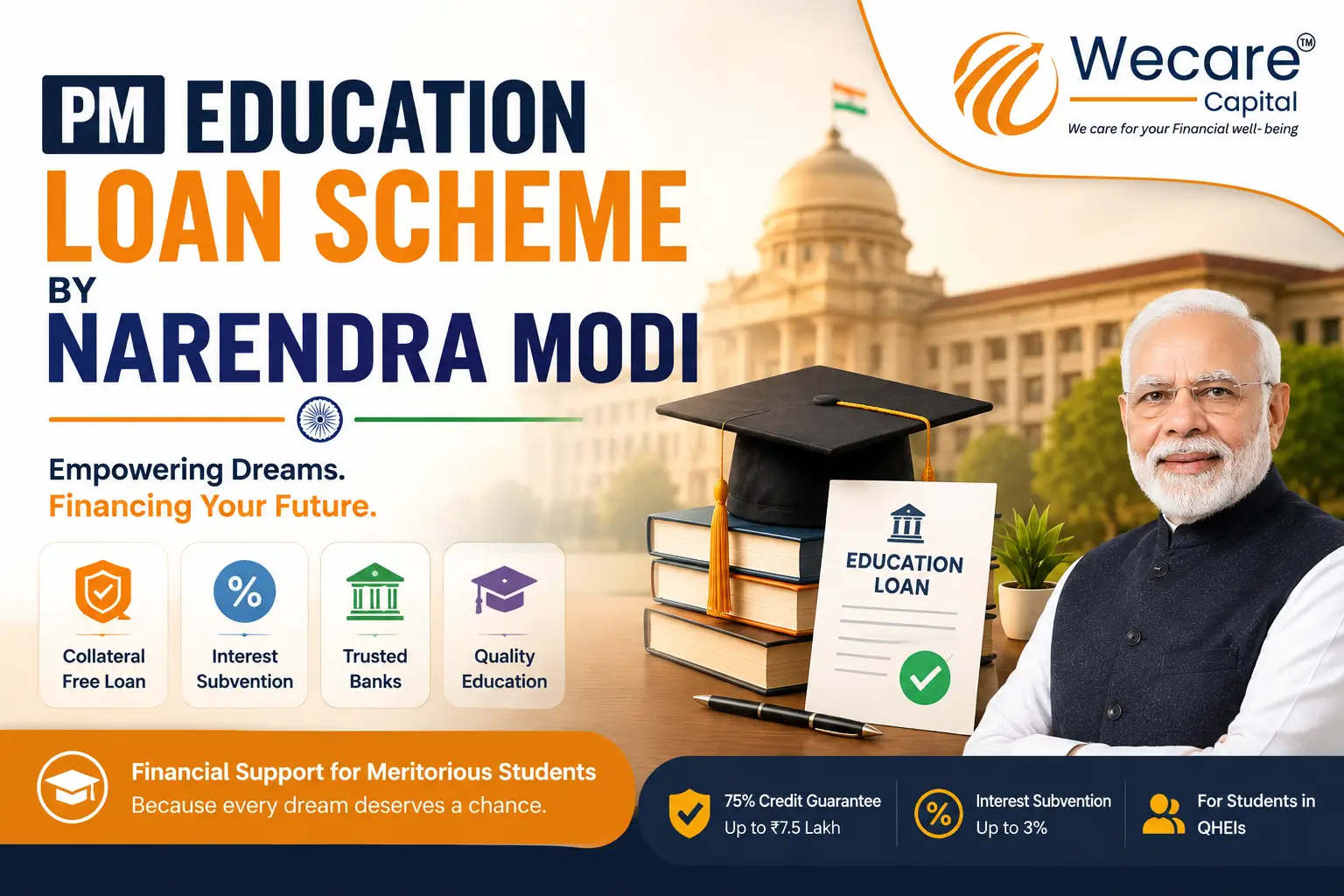
“Education Loan Scheme by Narendra Modi 2026” is one of the most searched terms among Indian families planning higher studies, yet no government program carries this exact name. Many applicants search this phrase, but the real initiative is the PM Vidyalaxmi Scheme, backed by the Ministry of Education. This confusion is common among first-time applicants. Below is a fact-checked breakdown of what actually exists and how to use it.
No. Officially, there is no program called the “Narendra Modi Education Loan Scheme.” The PM Vidyalaxmi Scheme is the actual program, which was authorized by the Ministry of Education on November 6, 2024, by the Union Cabinet. It provides students who are accepted into highly regarded universities with education loans without collateral.
PM Vidyalaxmi is a Central Sector Scheme offering collateral-free, guarantor-free education loans to meritorious students admitted to Quality Higher Education Institutions (QHEIs). It combines a government credit guarantee with income-linked interest subvention, run through the Ministry of Education and participating banks.
Key features:
PM Vidyalaxmi is the umbrella loan scheme offering collateral-free credit and a 3% interest subvention. CSIS, the older Central Sector Interest Subsidy Scheme, offers full interest subsidy only to economically weaker students. PM Vidyalaxmi now works alongside CSIS rather than replacing it.
| Feature | PM Vidyalaxmi | CSIS |
| Income limit | Up to ₹8 lakh | Up to ₹4.5 lakh |
| Subsidy level | 3% | 100% |
| Collateral-free | Yes | Yes (via linked loan) |
Eligible applicants are Indian citizens admitted on merit to a listed QHEI, not through management or NRI quota. Interest subvention additionally requires family income within the ₹4.5 lakh or ₹8 lakh slabs.
2026 updates:
Applicants typically need Aadhaar and PAN for student and parent, the admission letter, fee structure, Class 10 and 12 mark sheets, an income certificate, and bank account details. Requirements vary slightly by bank; mismatched documents are a common cause of delay.
PM Vidyalaxmi loans run through public sector banks, private banks, regional rural banks, and cooperative banks on the official portal. Public sector banks generally offer lower rates under government-backed norms.
Applying for PM Vidyalaxmi is fully digital through the official portal.
Most rejections stem from avoidable issues, not admission quality, since lenders assess repayment ability rather than the offer letter alone.
PM Vidyalaxmi’s interest subvention mainly applies within India. For abroad education, students typically use standard bank or NBFC loan products.
| Lender Type | Approx. Rate (2026) |
| Public sector banks | 8% – 11% |
| Private banks | 9.5% – 13.5% |
| NBFCs | 11% – 16% |
Targeted subsidies also exist for specific communities studying abroad, such as the Padho Pardesh Scheme
Comparing PM Vidyalaxmi against private and NBFC options can be confusing. Wecare Capital helps students compare eligible lenders, check PM Vidyalaxmi and CSIS eligibility, and prepare documentation for education loans in India and abroad without promising guaranteed approval or rates, since outcomes depend on the lender’s assessment.
There is no official Education Loan Scheme by Narendra Modi 2026, but PM Vidyalaxmi offers real, verified support: collateral-free loans, a government credit guarantee, and income-linked interest subvention. Details can change, so confirm current terms on the official PM Vidyalaxmi portal before applying. Talk to Wecare Capital to compare lenders and prepare a loan-ready application.
There is no scheme by this exact name. The real program is PM Vidyalaxmi, offering collateral-free education loans, a 75% credit guarantee, and income-linked interest subvention for students admitted to Quality Higher Education Institutions.
No official scheme carries this name. Applicants are usually looking for PM Vidyalaxmi, approved in November 2024 by the Ministry of Education, offering collateral-free loan benefits to eligible students at recognized institutions.
Indian citizens admitted on merit, not via management or NRI quota, to a listed QHEI. Interest subvention requires annual family income up to ₹8 lakh for 3%, or ₹4.5 lakh for full subsidy under CSIS.
Register on the official portal, complete the Common Education Loan Application Form, select up to three banks, upload documents, and track your sanction status. Apply for interest subvention once the loan is disbursed.
Aadhaar, PAN, admission letter, fee structure, mark sheets, income certificate, and bank details are typically required. Exact requirements can vary depending on the lending bank chosen.
 Study in France for Indian Students 2027: Cost, Universities & Requirements
September 25, 2026
Study in France for Indian Students 2027: Cost, Universities & Requirements
September 25, 2026
 Study in Finland for Indian Students: Universities, Fees, Courses & Visa Guide 2027
September 18, 2026
Study in Finland for Indian Students: Universities, Fees, Courses & Visa Guide 2027
September 18, 2026
 Education Loan Visa Rejection: Reasons, Solutions & How to Avoid It
September 11, 2026
Education Loan Visa Rejection: Reasons, Solutions & How to Avoid It
September 11, 2026
 HENNGE Global Internship Program 2026 Japan: A Complete Roadmap
September 3, 2026
HENNGE Global Internship Program 2026 Japan: A Complete Roadmap
September 3, 2026
 Study in Japan for Indian Students: Complete Guide 2026
August 29, 2026
Study in Japan for Indian Students: Complete Guide 2026
August 29, 2026