Education cost in India and abroad are rising every year. Because of this, thousand of students take education loans from banks and NBFCs to achieve their study goals.
But many borrowers later realize they are paying a very high interest rate and struggling with heavy monthly EMI payments.
The good news?
You can transfer your education loan to another bank and reduce your financial burden.
This process is called an education loan balance transfer. It helps borrowers switch their existing loan to another lender offering a lower interest rate, better repayment terms, and lower EMI.
An education loan transfer can help you:
In this guide, we will explain:
An education loan balance transfer means moving your existing education loan from one bank or NBFC to another lender offering better loan terms.
In simple words, the new lender closes your old loan and gives you a new loan at a lower interest rate.
This is also known as:
Many students in India now transfer education loans from NBFCs to banks because banks often offer cheaper interest rates and lower EMI options.
A balance transfer loan is a financial process where your outstanding loan amount is shifted from one lender to another.
The purpose of a loan balance transfer is usually to:
Education loan borrowers commonly use this option when market interest rates become lower than their current loan rate.
Yes, education loans can be transferred from one bank to another or from an NBFC to a bank.
Many lenders in India provide education loan transfer facilities for students who:
If your current education loan is expensive, transferring it to another bank can help you save a significant amount over time.
One of the biggest advantages of transferring your education loan is getting a lower interest rate.
Even a small reduction of 1%–3% can save lakhs during the repayment period.
A lower interest rate reduces your monthly EMI burden and makes repayment easier for students and parents.
Many borrowers specifically search for ways to lower education loan EMI through loan transfer.
An education loan refinance can help borrowers save a huge amount on total repayment costs.
For large loan amounts, savings can go up to ₹2 lakh–₹8 lakh depending on the tenure.
Another major benefit of education loan transfer is flexible repayment options such as:
Many students transfer loans from NBFCs to banks for:
Understanding the education loan transfer process is very important before applying.
Here is the complete step-by-step process.
Before applying for loan transfer, carefully review your current loan.
Check:
If your current interest rate is much higher than market rates, transferring your education loan may be beneficial.
Before choosing a lender, compare education loan transfer offers from multiple banks and NBFCs.
Popular lenders include:
Compare:
Always choose a lender offering maximum savings with minimum charges.
Most lenders require:
A better financial profile increases your chances of approval and lower interest rates.
You generally need the following documents:
Many lenders now provide online education loan transfer application facilities.
Once you finalize the lender:
After approval, the new lender pays your old loan amount directly to the previous bank.
Your old loan gets closed, and you start paying EMI to the new lender.
Many borrowers today transfer education loans from one bank to another to:
If your current bank is charging a high interest rate, shifting your loan to another lender can be a smart financial decision.
Students often take education loans from NBFCs because of quick approval and easier eligibility.
However, NBFC interest rates are usually higher than bank interest rates.
Because of this, many students later transfer education loans from NBFCs to banks to reduce EMI and overall repayment burden.
Before transferring your loan, always calculate the total cost involved.
Important charges include:
Only transfer your education loan if your total savings are greater than your transfer costs.
You should consider an education loan balance transfer when:
Transferring early in the repayment period usually provides maximum savings.
Avoid transferring your education loan if:
In such situations, continuing with the current lender may be better.
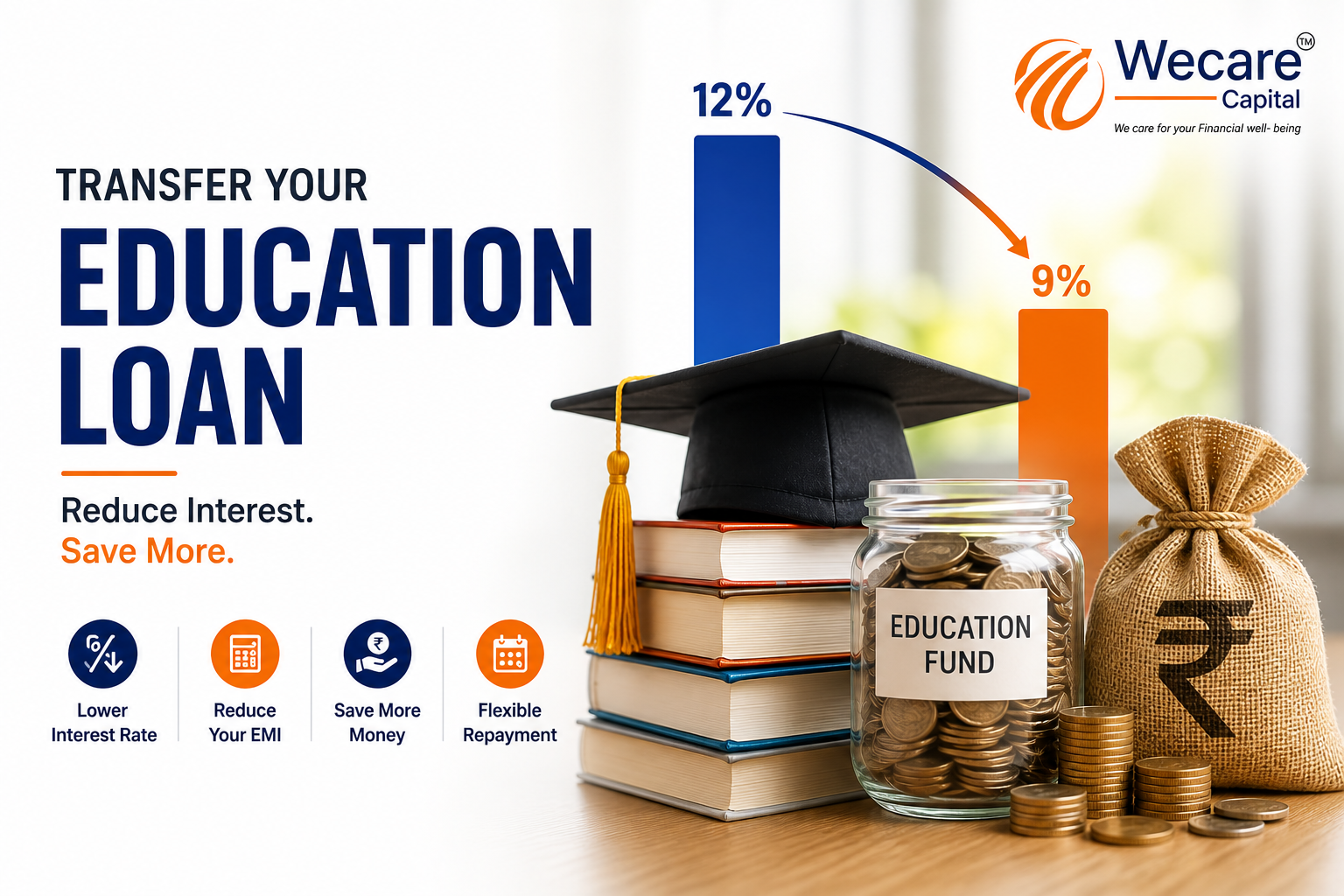
Example:
| Loan Details | Existing Loan | New Loan |
| Loan Amount | ₹20 Lakh | ₹20 Lakh |
| Interest Rate | 12% | 9% |
| EMI | Higher | Lower |
| Total Interest Paid | Much Higher | Lower |
With an education loan balance transfer, borrowers can save around ₹2 lakh–₹5 lakh depending on the tenure and interest rate difference.
If you want to reduce education loan EMI and save money, follow these tips:
A smart education loan transfer strategy can reduce long-term financial stress significantly.
Borrowers can continue claiming tax benefits under Section 80E even after transferring their education loan.
You can check official guidelines on the:
An education loan balance transfer is one of the smartest ways to reduce your education loan burden in India.
By transferring your loan from one bank to another, you can:
However, always compare lenders carefully, calculate total transfer charges, and choose the lender offering maximum savings.
A small financial decision today can help you save a huge amount in the future.
Yes, students studying abroad can also apply for an education loan balance transfer if they meet the lender’s eligibility requirements and repayment history criteria.
Collateral requirements depend on the lender and loan amount. Some banks may ask for collateral security, while others provide unsecured education loan transfer options.
Yes, many students transfer education loans from NBFCs to banks because banks generally offer lower education loan interest rates and flexible repayment options.
A temporary small impact may happen initially, but regular EMI payments after the transfer usually improve your credit score over time.
Yes, transferring your education loan to another bank with a lower interest rate can significantly reduce your monthly EMI burden.
 Study in France for Indian Students 2027: Cost, Universities & Requirements
September 25, 2026
Study in France for Indian Students 2027: Cost, Universities & Requirements
September 25, 2026
 Study in Finland for Indian Students: Universities, Fees, Courses & Visa Guide 2027
September 18, 2026
Study in Finland for Indian Students: Universities, Fees, Courses & Visa Guide 2027
September 18, 2026
 Education Loan Visa Rejection: Reasons, Solutions & How to Avoid It
September 11, 2026
Education Loan Visa Rejection: Reasons, Solutions & How to Avoid It
September 11, 2026
 HENNGE Global Internship Program 2026 Japan: A Complete Roadmap
September 3, 2026
HENNGE Global Internship Program 2026 Japan: A Complete Roadmap
September 3, 2026
 Study in Japan for Indian Students: Complete Guide 2026
August 29, 2026
Study in Japan for Indian Students: Complete Guide 2026
August 29, 2026